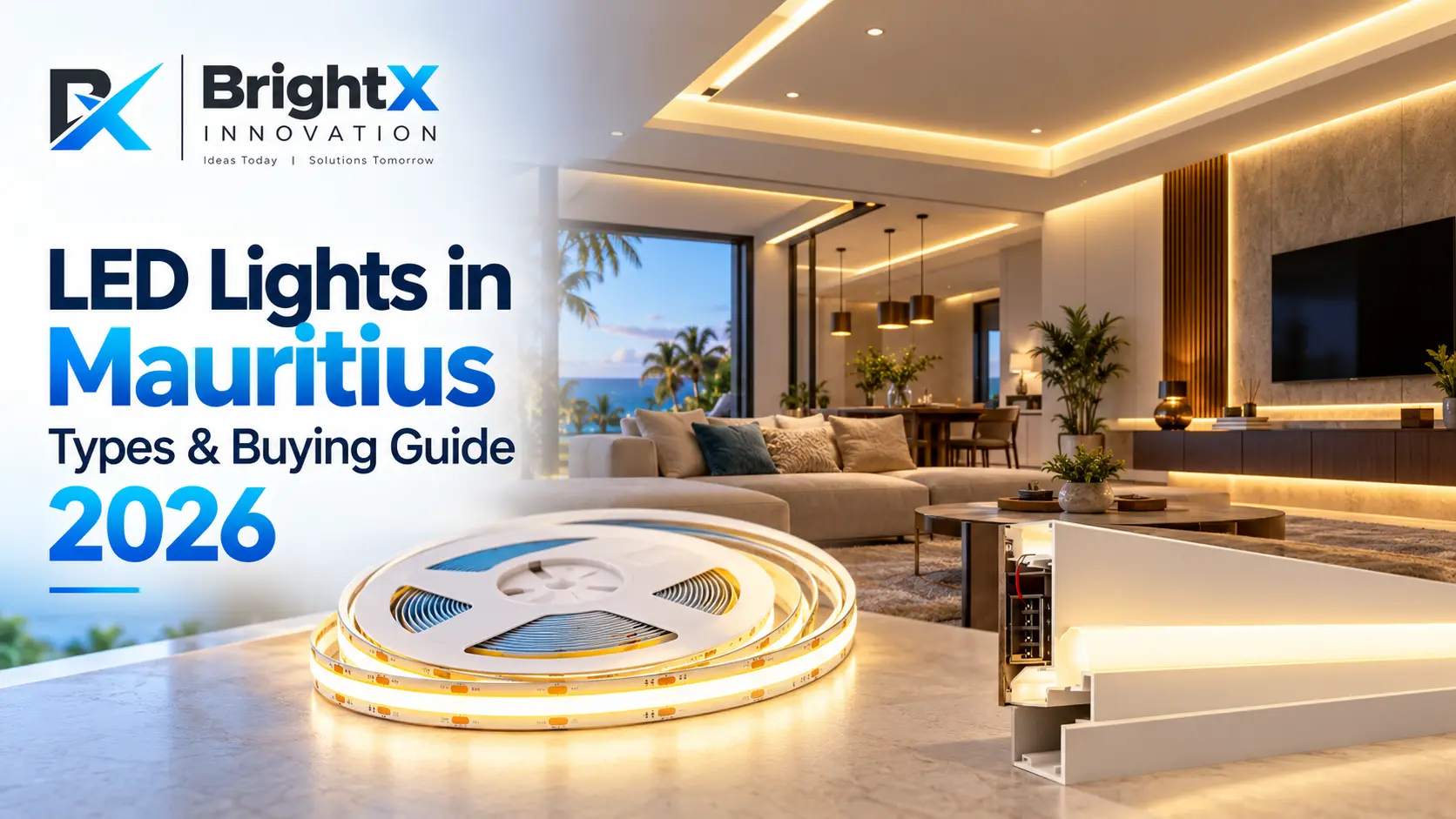
Looking for LED lights in Mauritius for a new home, renovation or commercial project? Start with the space, not the fitting. A living room needs comfortable general light and softer evening lighting; a kitchen needs visibility over work surfaces; a hotel or retail space needs a consistent finish that can be maintained over time. The LED product, its colour temperature, the profile and the way it is installed all affect the result.
BrightX Innovation supplies LED strips, COB strips, lighting profiles, corniche profiles and compatible control components, with guidance on product selection and installation. The aim is to choose a lighting system that suits the room and works as a complete setup—not simply to buy the brightest strip available.
Which LED lights work best for your space?
The most suitable LED lighting depends on what you need the light to do. General illumination makes a room usable; task lighting helps with activities such as cooking or reading; accent lighting highlights architectural details. Most well-planned rooms use more than one layer.
| Space | Lighting requirement | Practical LED approach |
|---|---|---|
| Living room or villa lounge | Comfortable ambient light and evening atmosphere | Warm LED strips in ceiling coves, combined with appropriate general lighting |
| Kitchen | Good visibility on countertops | Neutral-white linear lighting in a suitable profile, positioned to reduce shadows |
| Bedroom | Soft light without harsh glare | Concealed lighting behind details or along a ceiling perimeter |
| Office or retail interior | Consistent working light and clear presentation | Considered linear lighting with suitable brightness and colour rendering |
| Hotel or restaurant | Welcoming atmosphere and easy scene control | Warm layered lighting, with dimming or colour control where compatible |
These are application examples, not one-size-fits-all specifications. Ceiling height, daylight, wall finishes and the intended use of each room still matter.
Understanding the LED products before you buy
LED strip lights for flexible placement
LED strips work particularly well where a continuous or hidden light source is needed: shelves, cabinetry, ceiling edges and architectural recesses. They can add a useful second layer of light without drawing attention to the fitting itself. A strip used inside a kitchen cabinet has a different job from one illuminating a large ceiling recess, so the required brightness and mounting method should be selected separately.
COB LED strips for a smoother-looking line
COB (chip-on-board) strip lighting uses closely spaced light-emitting elements to create a more continuous visible line than many conventional dotted strips. It is worth considering for exposed linear details, shallow channels or places where the light source may be seen through a diffuser. Final appearance still depends on the profile depth, diffuser and installation.
BrightX lists warm-white 24 V COB LED strips at 3000 K, neutral-white 24 V COB strips at 4000 K, an extra-warm 230 V COB option at 2500 K, and RGB COB strips for adjustable colour effects. Those are different products with different installation requirements. Never assume that a controller, supply or wiring method is interchangeable between 24 V and 230 V systems.
The difference between COB, standard and RGB LED strips matters most when the strip itself is visible, the lighting needs to be practical, or the colour needs to change.
LED profiles and diffusers for a finished installation
The strip alone is rarely the whole solution. A suitable aluminium profile can protect the strip from accidental contact, help manage heat where designed for that purpose and give the installation a neater edge. A diffuser changes how individual LEDs appear and how the light spreads. Check the internal width, installation method and diffuser style before selecting a profile.
BrightX also works with corniche lighting profiles for surface-mounted and concealed interior details. The specific profile must be compatible with the chosen strip and ceiling or furniture design.
Corniche and cove lighting for indirect illumination
A corniche or cove hides the light source so illumination washes across a ceiling or wall. This is useful when the desired result is a softer atmosphere rather than visible light points. Position and distance from the illuminated surface matter: poor placement can create an uneven bright band or expose the strip from normal viewing positions.
BrightX lists several corniche profile designs, including 381S, M396, M395 and 507S. Compare the physical profile shape and how it integrates with the proposed ceiling detail before ordering.
Warm white, neutral white or RGB: what should you choose?
Colour temperature changes how a room feels. The values below are useful starting points, but finishes, daylight and personal preference affect the final choice.
| Lighting option | Typical use | What to consider |
|---|---|---|
| 2500–3000 K warm or extra-warm white | Lounges, bedrooms, hospitality and relaxed spaces | Creates a warmer visual character; check the actual appearance against the room finishes |
| 4000 K neutral white | Kitchens, some work areas and practical linear details | Often preferred where neutral-looking task illumination is useful |
| RGB colour-changing | Feature walls, entertainment areas and selected hospitality details | Requires compatible colour-control components; it may not replace dedicated white task lighting |
Brightness is a separate decision from colour temperature. Ask for lumen output, power consumption, colour-rendering information and any dimming requirements when comparing suitable products. A more powerful strip is not automatically a better choice if it produces glare or is installed in the wrong position.
What else is needed for a reliable LED setup?
Product selection should cover the complete electrical and mechanical setup. A low-voltage LED strip generally requires a correctly rated and compatible power supply, while colour-changing strips require an appropriate controller. Cable lengths, voltage drop, ventilation and access for maintenance should be considered before the ceiling or cabinetry is closed.
The BrightX catalogue includes RGB controllers and LED power supplies, including listed 100 W and 400 W options. Those ratings are not universal recommendations: the supply must be sized to the actual connected load and installation conditions, with a suitable safety margin determined by the installer. Mains-voltage products should be installed by a qualified professional in accordance with applicable electrical requirements.
Buying LED lights in Mauritius: what to check before ordering
For a single cabinet or a full building, a few checks at the buying stage can prevent expensive rework:
- Describe the intended use. Explain whether the lighting is for general visibility, work surfaces, mood or a feature detail.
- Measure the actual run. Record linear metres, corners, junctions and where power supplies can remain accessible.
- Compare compatible components. Confirm voltage, strip width, power supply, controller and profile together.
- Consider the environment. Bathrooms and exposed areas may require particular protection and safe installation arrangements; do not assume an indoor strip is suitable outdoors.
- Plan maintenance access. Concealed does not have to mean impossible to repair.
- Discuss installation before purchase. A site review can reveal surface and wiring limitations that a product photo cannot show.
How BrightX Innovation helps with LED lighting projects
BrightX Innovation works with homeowners, interior designers and commercial project teams looking for practical LED lighting solutions in Mauritius. Its offering includes LED strip options, profiles, corniche lighting and compatible accessories, alongside consultation and installation support.
If you have an interior plan or photographs of the area, sharing the approximate dimensions, preferred light appearance and the intended purpose of each zone helps narrow down the product options. For larger jobs, discuss the proposed layout and installation scope before purchasing materials.
See the current product range or request guidance on selecting and installing compatible lighting components.
Browse Lighting Products →Request a Quote →Common questions before choosing LED lighting
Are LED strips suitable as the only light source in a room?
Sometimes, but it depends on measured light output, room size, ceiling design and the tasks performed. In many spaces, LED strips work better as an additional layer alongside suitable general or task lighting.
What is the difference between an LED strip and an LED profile?
The LED strip produces light. The profile houses and positions it, often with a diffuser for a cleaner finish. They are complementary components rather than alternative products.
Can warm-white LED strips be dimmed?
Only if the selected strip and its associated driver or controller support a compatible dimming method. Confirm this before ordering.
Should I choose 24 V or 230 V LED strips?
Choose based on the actual product design, installation and compatibility requirements, not voltage alone. These systems have different electrical arrangements and should not be interchanged. Ask a qualified installer to specify the appropriate system.
A reliable lighting result comes from matching the light source, colour temperature, mounting details and controls to the way each space will be used. Confirm the layout and component specifications before ordering.